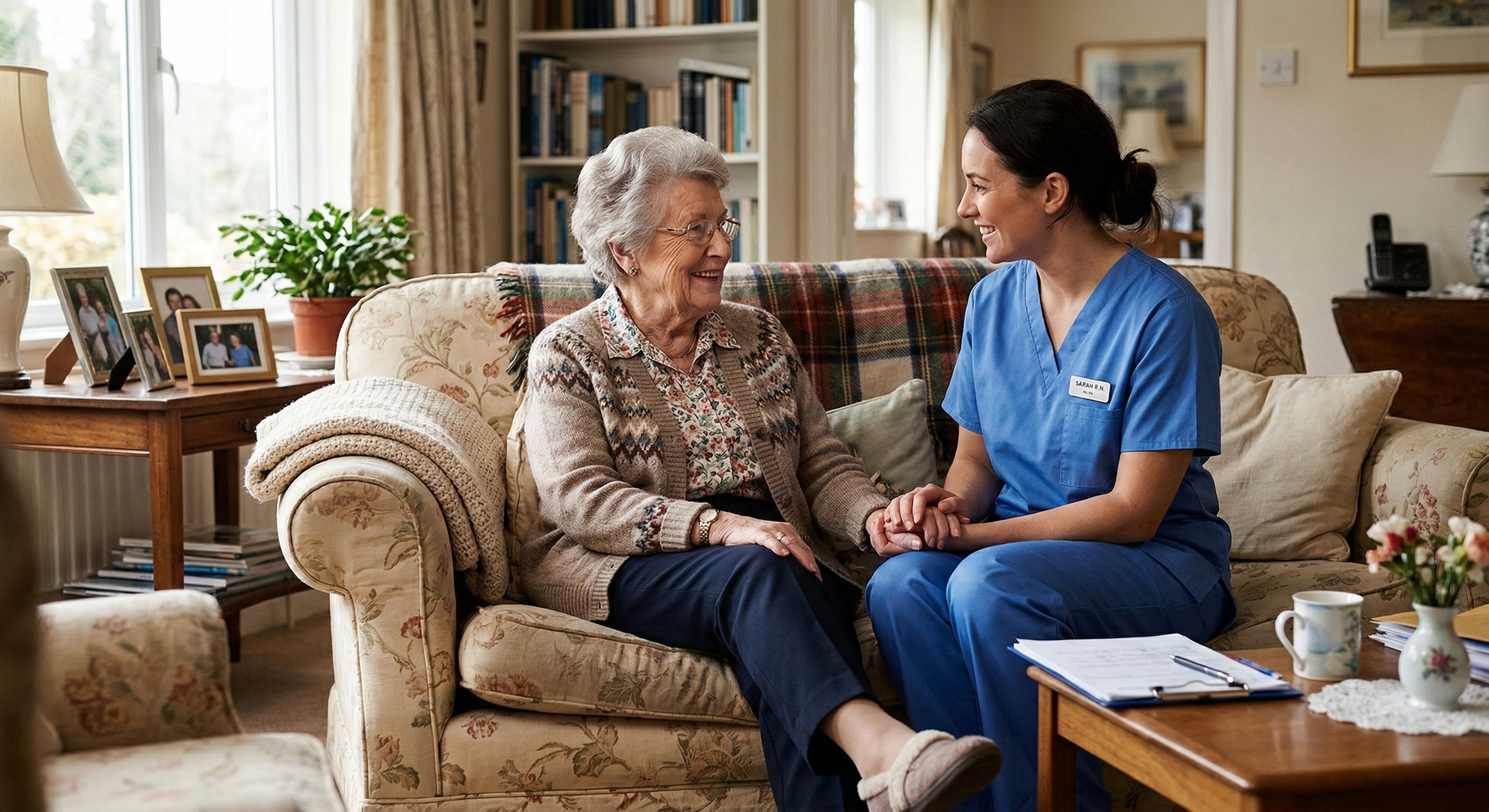


When an aging parent begins showing signs of loneliness, slipping household routines, or increased dependence on family for day-to-day tasks, the conversation about care often starts. Many families’ first instinct is to look at nursing homes or assisted living. But there is a category of support that falls well before those more intensive options, and it deserves to be understood on its own terms.
Companion care for seniors is a form of non-medical, in-home support designed to help older adults maintain their independence, stay socially connected, and manage the practical rhythms of daily life without leaving the homes they love. It is not nursing. It is not personal care. It occupies its own space in the continuum of senior support, and for a wide range of circumstances, it is precisely the right fit.

What Companion Care Is: A Clear Definition
Companion care is a non-medical home care service that provides practical assistance and meaningful social engagement for seniors who are largely independent but benefit from regular support. The companion caregiver is not a nurse, not a personal support worker, and not a therapist. They are a trained, dependable presence in a senior’s life who helps with day-to-day tasks and, critically, addresses the emotional and social dimension of aging that clinical care often cannot reach.
At its core, companion care is about quality of life. An older adult living alone in Outremont or Notre-Dame-de-Grace may be physically well enough to manage most personal routines but still face real challenges: a refrigerator that doesn’t get stocked properly, appointments that don’t get kept, medications taken at the wrong time, and days that pass without a single meaningful conversation. Companion care addresses all of that.
The service is customized to each individual and is typically scheduled on a flexible, hourly basis. It sits at the non-medical end of the home care spectrum, making it accessible, affordable, and appropriate for a broad population of seniors across greater Montreal.
What Companion Care Actually Includes
Companion care services are practical by design. They vary by provider and by the individual’s needs, but they generally cover four interconnected areas.
Practical Daily Assistance
Light housekeeping is one of the most immediate ways a companion caregiver adds value. This includes tidying common areas, changing bed linens, doing laundry, washing dishes, and keeping the living environment safe and organized. For a senior dealing with reduced mobility or low energy, these are tasks that can quietly accumulate into serious problems if unmanaged. A companion caregiver keeps things on track without overstepping into clinical territory.
Meal preparation is another cornerstone of practical daily support. A companion can plan and prepare nutritious meals based on the senior’s preferences and dietary needs, helping ensure that good nutrition doesn’t become a casualty of aging in place.
Errands and Transportation
Maintaining independence often hinges on mobility. A companion caregiver can accompany a senior on grocery runs, pharmacy visits, banking, and other necessary errands. They can provide transportation to medical appointments, social events, religious services, or family gatherings. For seniors who no longer drive and find public transit difficult, this kind of accompaniment is often what makes continued community participation possible.
Medication Reminders
It is important to understand what medication reminders are and are not. A companion caregiver can remind a senior to take their prescribed medication at the correct time, helping ensure adherence to existing regimens. They do not administer medications, manage prescriptions, or make any clinical decisions about dosage or treatment. That distinction keeps companion care firmly in non-medical territory while still addressing one of the most common practical gaps for seniors living at home.
Companionship and Social Engagement
This is the dimension of companion care that often matters most and is most easily overlooked in a clinical framing of senior support. A companion caregiver provides genuine human connection: conversation, shared activities, reading together, card games, walks, looking through photographs, discussing the news, or simply being present in a meaningful way.
For seniors who live alone, have experienced bereavement, or have limited access to family and community, this regular engagement is not a luxury. It is a health intervention in its own right.
What Companion Care Is Not: Important Distinctions
Clarity about what companion care does not include is just as important as understanding what it does. Families often come to these conversations with blurred expectations, and that mismatch can lead to disappointment or, worse, gaps in necessary care.
Companion Care vs. Personal Care
Personal care involves hands-on physical assistance with what are called Activities of Daily Living: bathing, grooming, dressing, toileting, mobility assistance, and transferring. Personal caregivers are trained and often certified specifically for this level of direct physical support.
Companion care does not include these services. A companion caregiver will not assist a senior with bathing or dressing, and they are not trained or equipped to do so. If a senior requires that level of physical assistance, personal care is the appropriate category. The two services are not mutually exclusive — many seniors benefit from a combination of companion care and personal care delivered by different providers, or by agencies that offer both under one arrangement.
Companion Care vs. Nursing Care
Nursing care involves clinical medical services provided by licensed registered nurses or licensed practical nurses. This includes wound care, catheter management, medication administration, vital sign monitoring, chronic disease management, and other medically regulated functions.
Companion care does not include any of these services, and companion caregivers are not licensed healthcare professionals. Families navigating complex medical situations, post-surgical recovery requiring clinical oversight, or seniors with significant chronic illness should work with a provider that offers certified nursing care in addition to, or instead of, companion support.
Who Benefits Most From Companion Care
Companion care is not a one-size-fits-all service, but there are several profiles of seniors for whom it tends to be particularly well-suited.
Seniors Living Alone
In 2024, one in four Canadians aged 65 and older lived on their own. For many of them, the absence of daily social contact and practical household support is a slow-moving risk factor. A companion caregiver provides the consistent presence that helps a solo senior stay organized, safe, and connected to a wider world.
Seniors with Early Cognitive Decline
In the early stages of Alzheimer’s or other forms of dementia, many seniors remain largely independent but benefit enormously from structured routine, gentle reminders, and a familiar face. A companion caregiver who builds genuine rapport over time can provide meaningful cognitive stimulation and help families monitor subtle changes in behavior or function, providing an important early-warning layer without clinical overreach.
Family Caregivers Who Need Relief
Caregiver burnout is a serious and underacknowledged problem for families providing informal care to aging relatives. Companion care offers respite: scheduled hours where a professional caregiver takes over, allowing family members to return to work, attend to their own health, or simply rest. This is not about transferring responsibility. It is about making the ongoing caregiving relationship sustainable.
Seniors Recovering From Illness or Surgery
The period following a hospitalization or surgical procedure is often when the need for support becomes most acute, and most visible. A companion caregiver can provide continuity of practical support during recovery: light housekeeping, meal preparation, medication reminders, transportation to follow-up appointments, and steady companionship during what can be a disorienting period. This kind of support complements any clinical care being received and helps prevent the isolation that often complicates recovery.
Seniors Who Are Socially Isolated
The data on senior loneliness in Canada is unambiguous. A 2024 survey by the National Institute on Ageing found that 43% of Canadians aged 50 and older are at risk of social isolation, and up to 59% have experienced loneliness. Researchers estimate that approximately 1.1 million older Canadians currently face chronic loneliness. The health consequences are significant: elevated risk of depression, dementia, cardiovascular disease, and premature death.
For seniors whose social networks have been reduced by bereavement, retirement, reduced mobility, or distance from family, a companion caregiver can restore meaningful human contact on a regular schedule.
How Companion Care Is Scheduled and Priced in Montreal
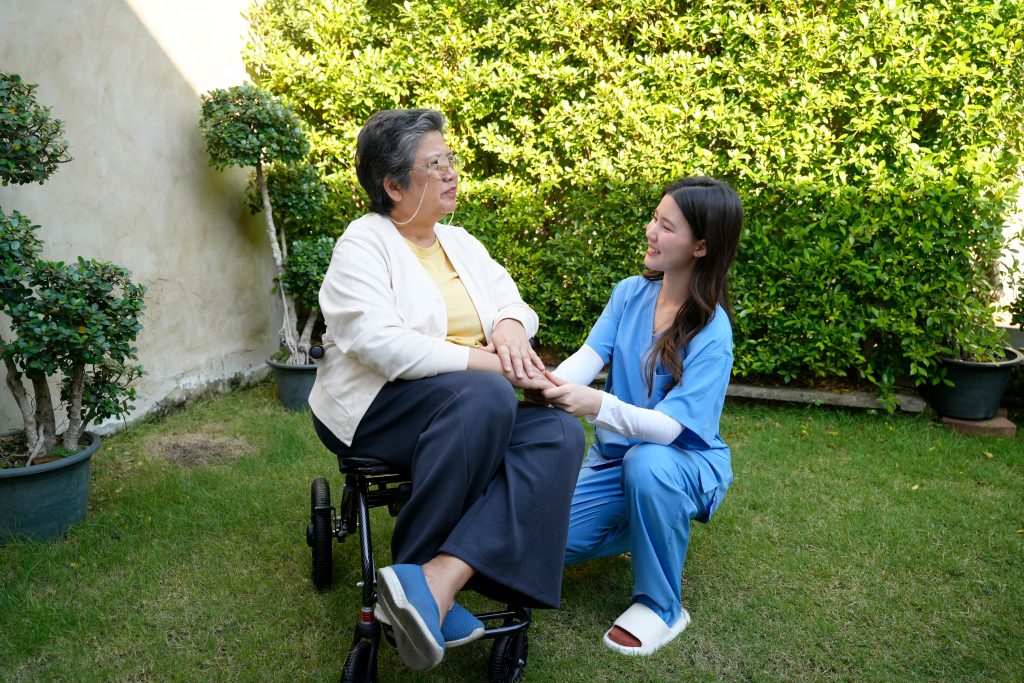
Companion care in Montreal is arranged on a private, fee-for-service basis through home care agencies. Most providers offer flexible scheduling built around the senior’s routine and the family’s needs. Common arrangements include a few hours per visit, several times a week, though some families opt for daily or more intensive scheduling depending on the circumstances.
Pricing is typically calculated on an hourly rate, with variation based on the provider, the level of service, and whether bilingual caregiving (French and English) is required. Given Montreal’s linguistic character, this is a genuinely practical consideration for many families. Some agencies also offer live-in companion care arrangements for seniors who require a more continuous presence.
The CLSC network in Quebec provides publicly funded home care for eligible seniors, but demand consistently outpaces availability, and the scope of that public care is primarily clinical. For companion-level non-medical support, private home care agencies remain the primary avenue. Some private expenses related to home care may qualify for federal tax credits or provincial assistance programs; families are encouraged to consult with their provider or a financial advisor to understand what may be available to them.
Most reputable agencies begin with a complimentary needs assessment, either by phone or in person, before any commitment is required. This is an important step: it allows the agency to understand the senior’s personality, preferences, living situation, and care requirements, and to match them with a caregiver who is likely to build a productive ongoing relationship.
How Premier Home Care Approaches Companion Care
Premier Home Care is a locally owned and operated home care agency serving Montreal and surrounding areas with a clear focus on non-medical companion and personal care for seniors. Under the leadership of owner Matt Del Vecchio, who has made it his mission to support our aging community, the agency brings a concierge-level experience to each senior and their family. This personal approach sets us apart from larger, more impersonal providers.
The Premier Home Care model is built on the understanding that the right caregiver match is not an afterthought. The team takes the time to understand each client’s needs, history, language preferences, personality, and the family dynamic surrounding their care. This careful approach to matching is what transforms a companion care arrangement from a transactional service into something that genuinely improves a senior’s daily life.
Services offered include companion care, light personal care, daily errands, meal preparation, medication reminders, and broader care management support for families navigating complex situations. The team is also equipped to assist families dealing with early cognitive decline, post-hospitalization transitions, and the practical challenges of managing a loved one’s care from a distance.
Premier Home Care offers a free initial assessment, giving Montreal families a low-pressure opportunity to ask questions, discuss their specific situation, and understand what a companion care arrangement would realistically look like. There is no obligation attached to that conversation, and it is typically the most useful starting point for families who are new to navigating home care options.
Conclusion
Companion care occupies a specific and important space in the landscape of senior support. It is not nursing. It is not intensive personal care. It is the structured, reliable, human presence that helps an older adult maintain independence, stay socially connected, manage their daily environment, and face the practical challenges of aging without being overwhelmed by them.
For Montreal families trying to figure out the right level of support for an aging parent or loved one, companion care is often the right first step, and sometimes the only step needed for a long time. The key is finding a provider who takes the matching process seriously and who treats the senior’s dignity and preferences as non-negotiable.
If you are not sure whether companion care is the right fit for your family’s situation, the most useful thing you can do is have a direct conversation with a trusted local provider. Premier Home Care offers free assessments and brings genuine expertise to exactly these conversations.